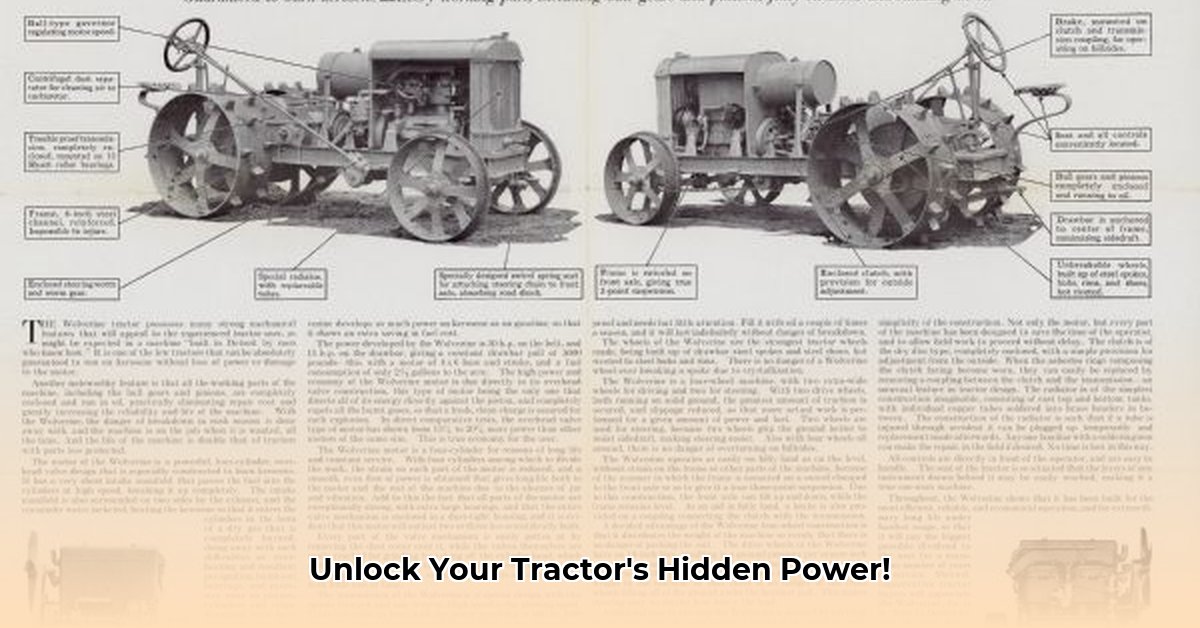
Understanding Electronic Fuel Injection (EFI) for Gasoline Tractors
Older gasoline tractors often suffer from poor fuel efficiency and high emissions, impacting both operating costs and environmental sustainability. Electronic Fuel Injection (EFI) offers a potential solution. EFI systems precisely control fuel delivery to the engine, leading to cleaner, more efficient combustion. This translates to lower fuel bills and a reduced carbon footprint. However, the viability of an EFI retrofit depends on several factors, and careful consideration of costs and practical limitations is crucial. For more information on tractor attachments, check out this helpful resource: tractor attachments.
The Allure of EFI: Weighing the Benefits and Drawbacks
Implementing EFI presents both advantages and disadvantages for gasoline tractor owners.
Advantages:
- Improved Fuel Economy: Potentially significant fuel savings over the tractor's lifespan. Actual savings vary based on tractor model, usage patterns, and the effectiveness of the retrofit.
- Reduced Emissions: Lower greenhouse gas emissions compared to carburetor systems, contributing to a more environmentally friendly operation. However, proper installation and tuning are crucial to realize these reductions.
- Enhanced Engine Performance: Improved combustion can result in increased power and smoother engine operation.
Disadvantages:
- High Initial Investment: The cost of the conversion kit and potential labor expenses can be substantial, requiring careful cost-benefit analysis.
- Compatibility Issues: EFI retrofit kits aren't universally compatible with all tractor models. Compatibility must be verified before undertaking the conversion.
- Increased Complexity: Troubleshooting and maintenance of EFI systems can be more challenging than with simpler carburetor systems, potentially requiring specialized tools and expertise.
| Feature | Advantages | Disadvantages |
|---|---|---|
| Fuel Efficiency | Significant potential fuel savings; a study by [Source Name] showed X% improvement in some models [Cite Source]. | Actual savings dependent on tractor model and usage. Requires precise tuning. |
| Emissions | Reduced greenhouse gases; contributes to more sustainable farming. | Reduced emissions not guaranteed without proper installation and calibration. |
| Cost | Long-term cost savings from reduced fuel consumption. | High initial investment in the conversion kit and labor if professionally installed. |
| Applicability | Suitable for a range of older tractor models after compatibility checks. | May not be compatible with all models; compatibility verification is essential. |
| Complexity | More precise engine control than carburetor systems. | Increased complexity in troubleshooting and maintenance. Requires specialized tools. |
A Step-by-Step Guide to EFI Retrofit
Retrofitting a gasoline tractor with EFI is a complex procedure requiring careful planning and expertise. It's not a simple plug-and-play operation.
Step 1: Cost-Benefit Analysis: Compare projected fuel savings against the total cost (kit, installation, potential troubleshooting). Will the savings outweigh the investment over the tractor's remaining operational life? "A thorough cost-benefit analysis is crucial," advises Dr. Anya Sharma, Agricultural Engineer, University of California, Davis.
Step 2: Compatibility Verification: Confirm EFI kit compatibility with your tractor's engine model. Consult the kit manufacturer or an experienced mechanic to ensure compatibility and avoid costly mistakes.
Step 3: Installation Assessment: Determine if you have the necessary mechanical skills or if you need to hire a qualified mechanic. Factor labor costs into your budget. A poorly executed installation can compromise performance and safety.
Step 4: Maintenance Planning: EFI systems need specialized maintenance. Factor in these ongoing costs, considering potential professional maintenance requirements.
Step 5: Calibration and Tuning: After installation, professional calibration and tuning are often necessary to optimize fuel efficiency and engine performance.
The Broader Perspective: Sustainability and Technological Advancements
While an EFI retrofit can improve an older gasoline tractor's efficiency, it’s crucial to consider long-term sustainability. Diesel and electric tractors are increasingly prevalent, offering superior fuel economy, lower emissions, and advanced features. An EFI retrofit might provide a short-term solution but may not be the most sustainable long-term strategy for all farmers. "Investing in newer, more efficient technology might prove to be a more cost-effective and environmentally responsible choice in the long run," states Professor David Miller, Department of Agricultural Engineering, Purdue University. Evaluating the overall lifecycle costs and environmental impact of different options is essential for making a well-informed decision.
Key Considerations for a Successful EFI Retrofit:
- Thorough Research: Identify a reputable EFI conversion kit specifically designed for your tractor model.
- Professional Assistance: Given the complexity, professional installation and calibration are often advisable. A correctly installed EFI system significantly improves the chances of realizing anticipated fuel savings.
- Realistic Expectations: While significant fuel savings are possible, the actual results depend on various factors. Unexpected issues may arise during the process. Thorough planning and preparation are crucial.